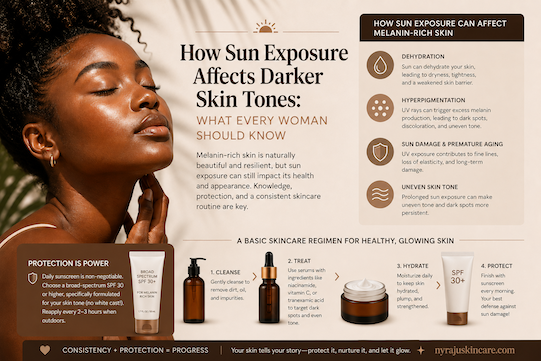
 Sun exposure and dark skin tones?
One of the most common myths in skin care is that darker skin tones don’t need sun protection.
While it’s true that melanin provides some natural defense against ultraviolet (UV) rays, it doesn’t make your skin immune to sun damage.
For women with melanin-rich skin, sun exposure can contribute to uneven skin tone, dehydration, and the appearance of dark spots. Understanding how the sun affects your skin allows you to make informed choices that help preserve its natural beauty throughout every season.
Whether you’re spending a day at the beach, gardening, walking your neighborhood, or simply running errands, protecting your skin should be part of your daily self-care routine.
Understanding Melanin and Its Natural Protection
Melanin is the pigment responsible for the rich, beautiful shades found in darker skin tones. It absorbs some ultraviolet radiation, offering more natural protection than lighter skin.
However, this protection is only partial.
Research suggests that while melanin reduces some UV damage, prolonged or repeated sun exposure can still affect the skin’s health and appearance over time.
This means that every skin tone benefits from thoughtful sun protection.
Common Effects of Sun Exposure on Melanin-Rich Skin
Sun exposure doesn’t always show up as a painful sunburn. In melanin-rich skin, its effects are often more subtle but can still be significant.
Hyperpigmentation
One of the most common concerns is hyperpigmentation.
When the skin becomes irritated or experiences inflammation, it may respond by producing excess melanin. This can leave behind dark patches or spots that may linger long after the original irritation has healed.
Sun exposure can make these areas appear even darker and more noticeable.
Uneven Skin Tone
Repeated UV exposure may contribute to an uneven-looking complexion. Areas that receive more sunlight—such as the forehead, cheeks, and nose—can develop variations in pigmentation over time.
Daily sun protection can help support a more even-looking skin tone.
Premature Signs of Aging
Many people believe darker skin doesn’t show signs of aging as quickly. While melanin offers some protection, long-term sun exposure can still contribute to:
- Fine lines
- Loss of skin elasticity
- Rough texture
- Dull-looking skin
Healthy skin habits today can help maintain your complexion for years to come.
Does Melanin-Rich Skin Still Need Sunscreen?
The simple answer is yes.
Sunscreen isn’t only for preventing sunburn. It also helps reduce the effects of daily UV exposure that can contribute to discoloration and premature skin aging.
Choose a broad-spectrum sunscreen with an SPF of at least 30 and apply it every morning—even on cloudy days.
If you’re spending extended time outdoors, remember to reapply according to the product’s directions.
Choosing a Sunscreen That Works for Darker Skin
One reason some women avoid sunscreen is the fear of a chalky or gray residue.
Fortunately, today’s formulations offer more elegant options.
When shopping for sunscreen, look for products that:
– Provide broad-spectrum UVA and UVB protection.
– Blend well into deeper skin tones.
– Feel lightweight and comfortable.
– Work well under makeup or moisturizers.
Finding a sunscreen you enjoy wearing makes daily use much easier.
Build a Sun-Smart Skin Care Routine
Protecting your skin isn’t complicated. A few consistent habits can make a meaningful difference. Cleanse, tone and moisturize, that’s a good basic regimen to start with.
Cleanse Gently
After spending time outdoors, cleanse your skin to remove sunscreen, sweat, and environmental pollutants.
A gentle cleanser helps refresh the skin without disrupting its natural moisture barrier.
Replenish Hydration
Sun and heat can leave the skin feeling dehydrated.
Follow cleansing with hydrating products that help replenish moisture and support your skin’s natural barrier.
If you’d like to learn more about why hydration is so important, be sure to read our companion article, Why Hydration Matters More Than You Think.
Moisturize Daily
Moisturizers help lock in hydration while supporting smoother, softer-looking skin.
Products containing botanical oils and antioxidants can be especially beneficial after a day outdoors.
Botanical Ingredients That Complement Sun Care
While sunscreen is your first line of defense against UV exposure, nourishing botanical ingredients can help support healthy-looking skin as part of your daily routine.
Rosehip Seed Oil
Rosehip seed oil is appreciated for its nourishing fatty acids and naturally occurring antioxidants.
It helps support the skin’s moisture barrier, making it an excellent addition to a routine focused on hydration and overall skin wellness.
To learn more, read our Ingredient Spotlight: Rosehip Seed Oil article.
Aloe Vera
Aloe vera is well known for its soothing, lightweight hydration.
It leaves skin feeling refreshed and comfortable, particularly after spending time outdoors.
Green Tea
Green tea is rich in antioxidants that help defend the skin against everyday environmental stressors.
Together with a consistent skin care routine, it supports healthy-looking skin throughout the year.
Additional Ways to Protect Your Skin
Sun protection goes beyond sunscreen alone.
Simple lifestyle habits can further support your skin’s health.
Wear Protective Clothing
Wide-brimmed hats, sunglasses, and lightweight long sleeves provide additional protection during prolonged outdoor activities.
Seek Shade
Whenever possible, spend time in shaded areas during the strongest sunlight, typically between late morning and mid-afternoon.
Stay Hydrated
Healthy skin begins from within.
Drinking water throughout the day helps support your body’s overall hydration, especially during hot summer weather.
Consistency Is the Secret to Healthy Skin
There is no single product that can undo years of sun exposure.
The most effective approach is building healthy daily habits.
A routine that includes gentle cleansing, proper hydration, daily moisturization, antioxidant-rich botanical ingredients, and broad-spectrum sunscreen helps support healthy, radiant-looking skin over time.
Small, consistent actions often produce the greatest long-term benefits.
Continue Building Your Healthy Skin Routine
If you enjoyed this article, continue exploring our Summer Skin Care Series:
- Summer Skin Care for Melanin-Rich Skin – Learn how to create a seasonal routine that keeps your complexion healthy and glowing.
- Why Hydration Matters More Than You Think – Discover why hydrated skin looks healthier, smoother, and more radiant.
Each article builds on the last, helping you make informed choices about caring for melanin-rich skin naturally.
Discover Natural Skin Care Designed for Melanin-Rich Skin
At Nyraju Skin Care, we believe healthy skin begins with education, consistency, and thoughtfully selected botanical ingredients. Our collection of cleansers, moisturizers, serums, and antioxidant-rich treatments is designed to help nourish, hydrate, and support the natural beauty of melanin-rich skin every day.
Whether you’re beginning a new skin care journey or refining your existing routine, we’re here to help you care for your skin with confidence—one healthy habit at a time.
That’s it for this week. As always, we’re ….
Dedicated to Your Beauty,
Juliette Samuel,
Esthetician/Author/Publisher,
Nyraju Skin Care

Recent Post
Essential Oils For Afro Textured Hair
Here’s A Great Book To Add To Your Library!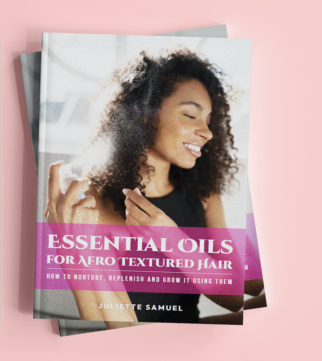
If you’re looking for a natural alternative to care for your Afro Texture hair, essential oils could be the key. Your kinky, curly, coiled hair is shaped differently and has a magnificent history. We want you to celebrate it!
Essential oils have been part of the stories and celebrations for centuries when it comes to your hair and its health.
Essential oils are a natural alternative for the care and maintenance of your hair. They’re lightweight and penetrate your hair and scalp well.
Many of them have been known to stimulate your scalp, increase circulation, nourish hair follicles, grow it and improve your overall hair health.
Get Your Copy Today!
Essential Oils For Afro Textured Hair-How To Nurture Replenish and Grow It Using Them
-You’ll learn which essential oils are best for your unique hair.
-You’ll learn about carrier oils and the ones best used for your hair and scalp care
-Of course you’ll find Safety Precautions for using essential oils.
-You’ll even find recipes to try
-There’s information on the importance of Nutrition and Lifestyle Choices and how each affects your hair.
There’s so much more …
Share and Follow
