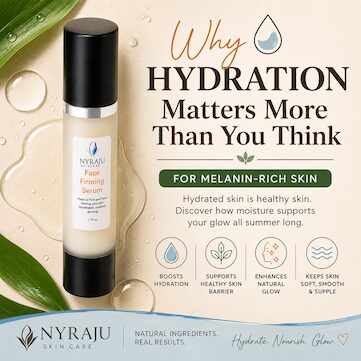
 Have you ever noticed that your skin looks dull, feels tight, or seems less radiant during the summer, even though the weather is warm and humid? Many people assume these signs mean they need a heavier moisturizer. In reality, the issue may be dehydration rather than dryness.
Hydration is one of the most overlooked aspects of skin care, yet it plays a vital role in maintaining a healthy-looking complexion. This is especially true for melanin-rich skin, which can still experience dehydration despite producing natural oils.
Understanding how hydration works—and how to support your skin both inside and out—can help you achieve the smooth, glowing complexion you desire throughout every season.
Hydration vs. Moisturization: What’s the Difference?
Although the terms are often used interchangeably, hydration and moisturization are not the same.
Hydration Adds Water
Hydration refers to increasing the water content within the skin. Well-hydrated skin appears plumper, smoother, and more vibrant.
Hydrating ingredients attract and bind water to the skin, helping it maintain a fresh, supple appearance.
Moisturization Helps Lock It In
Moisturizers help seal hydration into the skin while supporting its natural protective barrier. They often contain nourishing oils and emollients that reduce moisture loss.
Think of hydration as giving your skin a refreshing drink of water, while moisturization acts like a protective seal that helps keep that water from evaporating.
Healthy skin needs both.
Can Melanin-Rich Skin Become Dehydrated?
Absolutely.
A common misconception is that darker skin tones don’t need as much hydration because they may produce more natural oil. However, oil and water serve different functions.
Your skin can be oily and dehydrated at the same time.
Signs of dehydrated skin may include:
- -Tightness after cleansing
- -Dull-looking complexion
- -Rough texture
- -Fine lines appearing more noticeable
- -Skin that feels uncomfortable despite looking oily
Recognizing these signs early allows you to adjust your routine before dehydration affects your skin’s appearance.
Why Summer Can Lead to Dehydrated Skin
Many people associate dehydration with winter, but summer presents its own challenges.
Increased Water Loss
Hot temperatures and increased perspiration can lead to greater water loss throughout the day. Air conditioning can also contribute to dehydration by reducing moisture in the environment.
Without replenishing that lost moisture, your skin may begin to feel dry, tight, or lackluster.
Sun Exposure
Spending more time outdoors exposes your skin to ultraviolet (UV) rays, which can affect your skin’s natural moisture balance. Daily sun protection and a hydrating routine work together to help support healthy-looking skin.
To learn more about protecting your complexion during the warmer months, read our companion article, Summer Skin Care for Melanin-Rich Skin, where we discuss building a complete seasonal routine.
Ingredients That Help Hydrate the Skin
Choosing products formulated with hydrating ingredients can make a noticeable difference in how your skin looks and feels.
Aloe Vera
Aloe vera is widely appreciated for its lightweight, soothing hydration. It helps refresh the skin without leaving a greasy finish, making it an excellent choice during warmer weather.
Hyaluronic Acid
Despite its name, hyaluronic acid is a gentle ingredient that attracts water to the skin, helping it appear smoother and more supple.
It works well for many skin types and layers beautifully under moisturizers. You’ll often find it in facial serums.
Glycerin
Glycerin is a humectant, meaning it draws moisture from the environment into the skin. It’s commonly found in hydrating cleansers, toners, and moisturizers.
Rosehip Seed Oil
While rosehip seed oil is primarily known as a nourishing botanical oil, it also supports the skin’s natural barrier, helping reduce moisture loss and leaving the complexion soft and healthy-looking.
In our next article, Ingredient Spotlight: Rosehip Seed Oil, we’ll explore why this nutrient-rich oil has become a favorite for those seeking natural skin care solutions.
Daily Habits That Support Hydrated Skin
Healthy skin care goes beyond the products you apply.
Drink Water Throughout the Day
Proper hydration starts from within. While drinking water alone won’t solve every skin concern, staying hydrated supports your body’s overall health, including your skin.
Make it a habit to sip water consistently rather than waiting until you feel thirsty.
Eat Water-Rich Foods
Many fruits and vegetables contain high amounts of water and beneficial nutrients.
Great choices include:
- -Watermelon
- -Cucumbers
- -Oranges
- -Strawberries
- -Celery
- -Leafy greens
These foods can complement your skin care routine while supporting overall wellness.
Avoid Over-Cleansing
Cleansing too frequently or using harsh products can strip away your skin’s natural protective barrier.
Instead, choose a gentle cleanser that removes impurities while helping your skin maintain its moisture balance.
Build a Hydration-Focused Skin Care Routine
An effective daily routine doesn’t have to be complicated.
Morning Routine
- -Cleanse gently.
- -Apply a hydrating serum if desired.
- -Follow with a nourishing moisturizer.
- -Finish with a broad-spectrum sunscreen.
Evening Routine
- -Remove sunscreen and impurities with a gentle cleanser.
- -Reapply hydrating products.
- -Seal in moisture with a rich but comfortable moisturizer.
Consistency is far more important than using dozens of products.
Common Hydration Mistakes
Many people unknowingly make choices that leave their skin feeling less hydrated.
Avoid these common mistakes:
- -Assuming oily skin doesn’t need hydration
- -Skipping moisturizer during humid weather
- -Taking long, very hot showers
- -Waiting until your skin feels dry before moisturizing
- -Forgetting to drink enough water during the day
Making small adjustments to your daily routine can have a lasting impact on the appearance of your skin.
Healthy, Hydrated Skin Starts with Consistency
Beautiful skin isn’t achieved overnight. It’s the result of caring for your skin consistently and giving it the hydration it needs every day.
For melanin-rich skin, hydration supports a smoother texture, a more radiant appearance, and a healthier-looking complexion throughout every season.
Whether you’re choosing hydrating botanical ingredients, drinking more water, or simplifying your skin care routine, every positive habit contributes to healthier skin over time.
Continue Your Summer Skin Care Journey
To expand your understanding of healthy skin care, explore these related articles on our blog:
- – Summer Skin Care for Melanin-Rich Skin – Learn how to create a complete seasonal routine that protects and nourishes your complexion.
- – Ingredient Spotlight: Rosehip Seed Oil – Discover why this antioxidant-rich botanical oil has become a trusted favorite for supporting soft, radiant skin.
- – How Sun Exposure Affects Darker Skin Tones – Understand why melanin-rich skin still benefits from daily sun protection and how to reduce the appearance of uneven skin tone.
Looking for skin care products that help support hydration naturally? Explore the Nyraju Skin Care collection, thoughtfully formulated with botanical ingredients selected to help nourish, moisturize, and enhance the natural beauty of melanin-rich skin.
That’s it for this week. As always …
Dedicated to Your Beauty,
Juliette Samuel,
Esthetician/Author/Publisher,
Nyraju Skin Care

Recent Post
Essential Oils For Afro Textured Hair
Here’s A Great Book To Add To Your Library!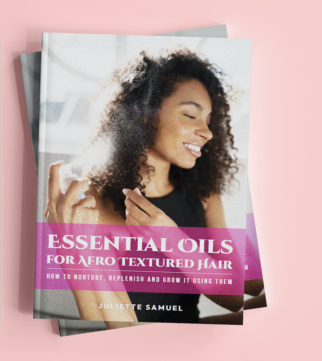
If you’re looking for a natural alternative to care for your Afro Texture hair, essential oils could be the key. Your kinky, curly, coiled hair is shaped differently and has a magnificent history. We want you to celebrate it!
Essential oils have been part of the stories and celebrations for centuries when it comes to your hair and its health.
Essential oils are a natural alternative for the care and maintenance of your hair. They’re lightweight and penetrate your hair and scalp well.
Many of them have been known to stimulate your scalp, increase circulation, nourish hair follicles, grow it and improve your overall hair health.
Get Your Copy Today!
Essential Oils For Afro Textured Hair-How To Nurture Replenish and Grow It Using Them
-You’ll learn which essential oils are best for your unique hair.
-You’ll learn about carrier oils and the ones best used for your hair and scalp care
-Of course you’ll find Safety Precautions for using essential oils.
-You’ll even find recipes to try
-There’s information on the importance of Nutrition and Lifestyle Choices and how each affects your hair.
There’s so much more …
Share and Follow
